
What are Complex Disorders?
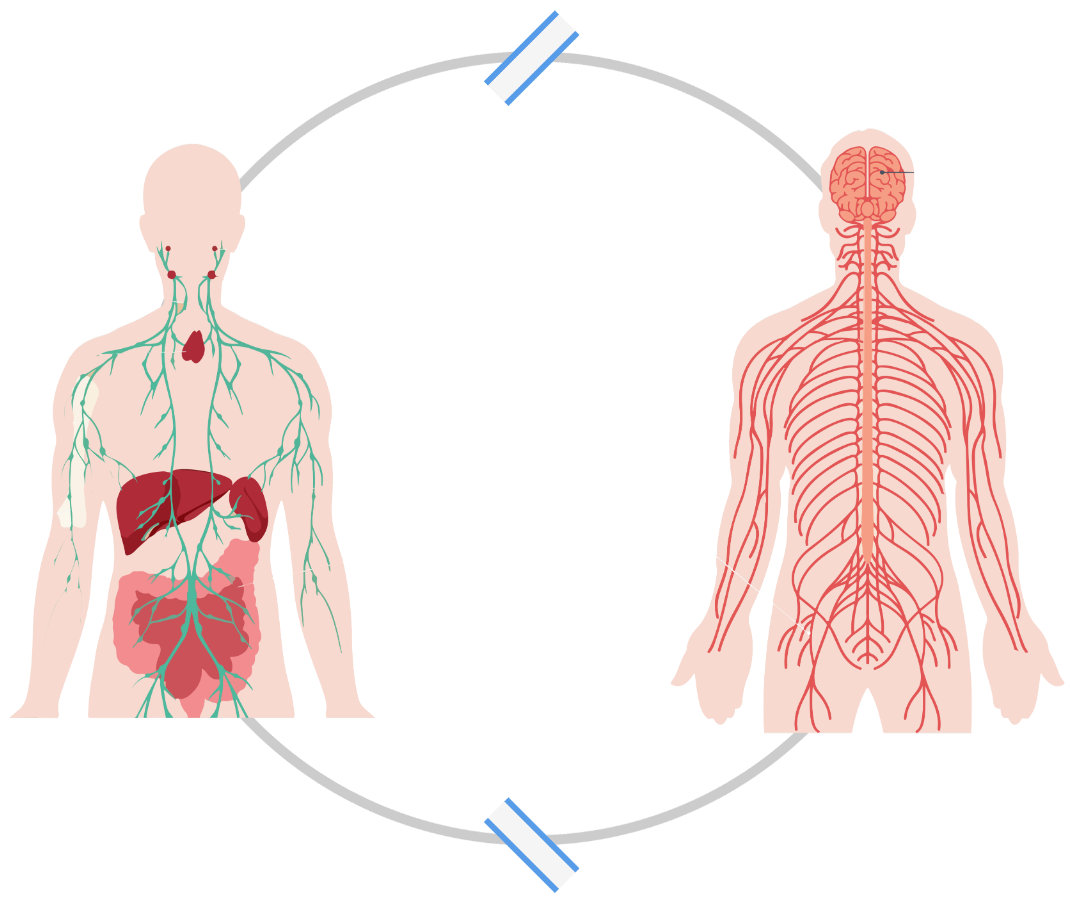
Complex Disorders are chronic conditions that affect multiple body systems and often result from impaired communication of the neuroimmune axis.
These conditions disrupt signaling across neurological, immune, autonomic, and peripheral systems, producing symptoms that affect multiple body systems at once. Their complexity reflects interconnected dysfunction rather than isolated disease processes.
Patients are heterogeneous, differing from patient to patient and even within the same patient over time. Symptoms and underlying biologic drivers can shift dynamically across interconnected systems.
While these conditions may appear complex, there is a scientific framework for understanding them: following the interconnectedness of neurological, immune, autonomic, and metabolic systems rather than studying each in isolation. Progress depends on understanding how dysfunction moves across the neuroimmune axis and changes over time within each individual patient.
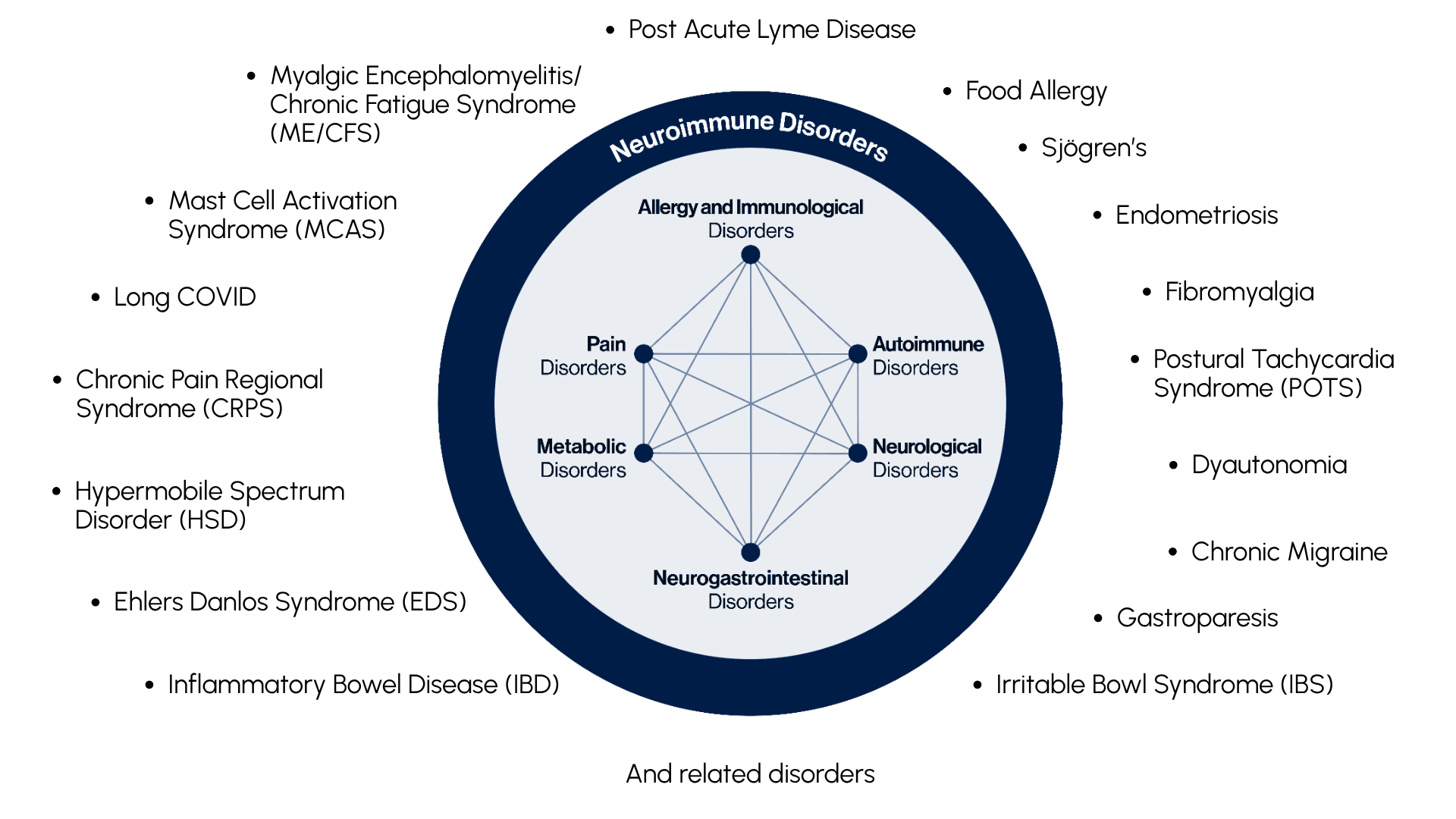
Complex Disorders May Include These Diagnoses:
-
Many complex disorders may share common biological pathways, including immune dysfunction, inflammation, autonomic dysregulation, and metabolic disruption. Patients frequently report overlapping symptoms and carry multiple diagnoses, which researchers believe may point to shared underlying mechanisms, though this is still an active area of investigation.
Studying these overlaps may help identify common drivers of disease, improve diagnostic accuracy, and accelerate the development of more targeted and effective treatments.
-
Complex disorders affect a large and growing population of patients living with chronic, multi-system illness. Long COVID alone is estimated to have affected more than 400 million people worldwide, and many patients experience overlapping conditions involving immune, autonomic, vascular, neurological, connective tissue, and inflammatory dysfunction.
Women are disproportionately and more severely affected by these conditions. Women account for roughly 85% of patients living with POTS, approximately 75% of people living with ME/CFS, migraine, fibromyalgia, and IBS, and women are also at significantly higher risk of developing Long COVID.
Yet the biological, hormonal, immune, vascular, and societal drivers of these disparities remain under-researched and poorly understood. -
Complex disorders often appear to affect more than one biological system simultaneously, including the immune, nervous, endocrine, and gastrointestinal systems. Because medicine is organized around individual specialties and organ systems, patients with multi-system conditions frequently find themselves navigating care across multiple providers.
When biological pathways such as inflammation or neuroimmune signaling become dysregulated, symptoms can present in ways that seem diverse and unrelated, making diagnosis and treatment particularly challenging. Researchers increasingly believe that advancing cross-disciplinary science will be essential to better understanding and treating these conditions.
-
While some complex disorders are also classified as rare, the two categories are not synonymous. Complex disorders are defined by their multi-system involvement and diagnostic difficulty rather than their prevalence. Some, like Long COVID and POTS, may affect millions of people yet remain poorly understood and inadequately treated, which is a key driver of CODA's research focus.