
CODA Craniocervical Dysfunction Initiative (CCD)
What is the CODA CCD Initiative?
The CODA Craniocervical Dysfunction (CCD) Initiative investigates how altered neuroimmune signaling at the craniocervical junction contributes to the initiation and progression of complex chronic disorders.
CODA’s initiative studies craniocervical dysfunction as a biologically anchored model system to better understand the mechanisms that drive complex multisystem illness.
Steering Committee
Our CODA CCD Steering Committee unites best-in-class clinical and research leaders to provide scientific oversight, strategic guidance, and final authority for the CCD Delphi Research Protocol.
-

Nancy Klimas, MD
Director, Neuroimmune Medicine, Nova Southeastern University
-

Petra Klinge, MD, PhD
Professor of Neurosurgery, Brown University
-

Ilene Ruhoy, MD, PhD
Director, Neuroimmune and Connective Tissue Neurology Program, Atria Health Institute
-

Lauren Natbony, MD
CEO & Medical Director, Integrative Headache Medicine of New York
-

Peter Rowe, MD
Professor of Pediatrics, Johns Hopkins University
-

Mijail Serruya, MD, PhD
Director, Raphael Center for Neurorestoration. Thomas Jefferson University
-

Mikki Tal, PhD
Director, Center for Neurorestoration, Massachusetts Institute of Technology
-

Brayden Yellman, MD
Rheumatologist, ME/CFS Specialist
What is Craniocervical Dysfunction?
Craniocervical dysfunction refers to abnormalities affecting the stability or alignment of the craniocervical junction. These disruptions can alter communication between the brain, spinal cord, and body-wide regulatory systems.
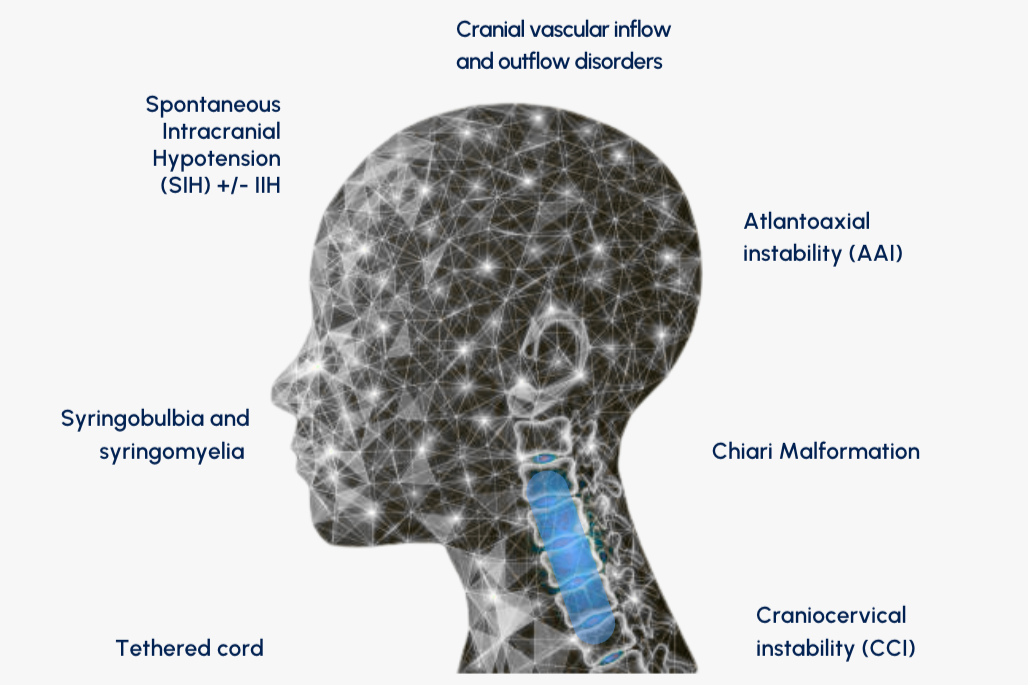
The craniocervical junction, where the skull meets the upper cervical spine, contains critical neural and vascular structures that regulate autonomic, immune, metabolic, and neurological functions. When biomechanical instability or structural compression occurs in this region, it may disrupt these systems and contribute to widespread symptoms across the body.
CODA CCD Studies
CODA CCD Modified Delphi Process & Eligibility Criteria
CODA CCD Steering Committee: Nancy Klimas, MD, Petra Klinge, MD, PhD, Ilene Ruhoy, MD, PhD, Lauren Natbony, MD, Peter Rowe, MD, Mijail Serruya, MD, PhD, Michal Tal, PhD, Brayden Yellman, MD
In progress. Funded.
Led by the CODA CCD Executive and Steering Committees, the CODA CCD Modified Delphi Process is a multidisciplinary consensus initiative designed to develop standardized research eligibility criteria and a broad characterization framework for Craniocervical Dysfunction (CCD) in patients with complex chronic disorders. Using a modified Delphi methodology, the project brings together experts across neurology, neurosurgery, autonomic medicine, radiology, immunology, rehabilitation, biomechanics, and related disciplines to establish consensus definitions, assessment domains, and operational research parameters for CCD.
CODA CCD Sub-Typing Initiative
In progress.
Currently Seeking Additional Funding.
Using AI-driven analysis, CODA data scientists will integrate and interpret multiple datasets to identify computable phenotypes and define biologically informed patient subgroups for craniocervical dysfunction. These subgroup classifications will support patient stratification for clinical trials, targeted interventions, and future therapeutic development.
CODA Glymphatics Study
Currently Under Review.
This study will evaluate how impaired glymphatic clearance may contribute to the accumulation of inflammatory and metabolic byproducts within the central nervous system and how these disturbances relate to symptom severity, disease progression, and multisystem dysfunction. The initiative will examine physiologic factors associated with glymphatic activity, including sleep architecture, autonomic dynamics, cerebrovascular function, and craniocervical biomechanics, while exploring potential therapeutic approaches aimed at restoring clearance pathways and improving neurological and systemic function.
CODA CCD Multi-Center Tissue Study
Currently Under Review
This study is designed to investigate tissue-level changes associated with Craniocervical Dysfunction (CCD) in patients with complex disorders. The study will collect and analyze surgical tissue samples alongside clinical, imaging, and patient phenotype data to better understand the biological mechanisms linking craniocervical dysfunction with neural inflammation, autonomic dysregulation, connective tissue abnormalities, and immune activation. By integrating tissue analysis with patient subtyping and longitudinal clinical data, the study aims to identify shared pathological patterns, characterize biologically distinct patient populations, and adavance understanding of how dysfunction within the craniocervical region may contribute to multisystem disease and inform effective therapeutic approaches.
Clinically, patients may receive diagnoses related to craniocervical dysfunction including:
Craniocervical instability (CCI)
Atlantoaxial instability (AAI)
Chiari malformation
Syringobulbia and syringomyelia
Cranial vascular inflow and outflow disorders
Tethered cord (which may co-occur with craniocervical dysfunction, patients with connective tissue disorders)
Spontaneous intracranial hypotension (SIH)
Idiopathic Intracranial hypertension (IIH)
These structural changes may affect key physiological systems including:
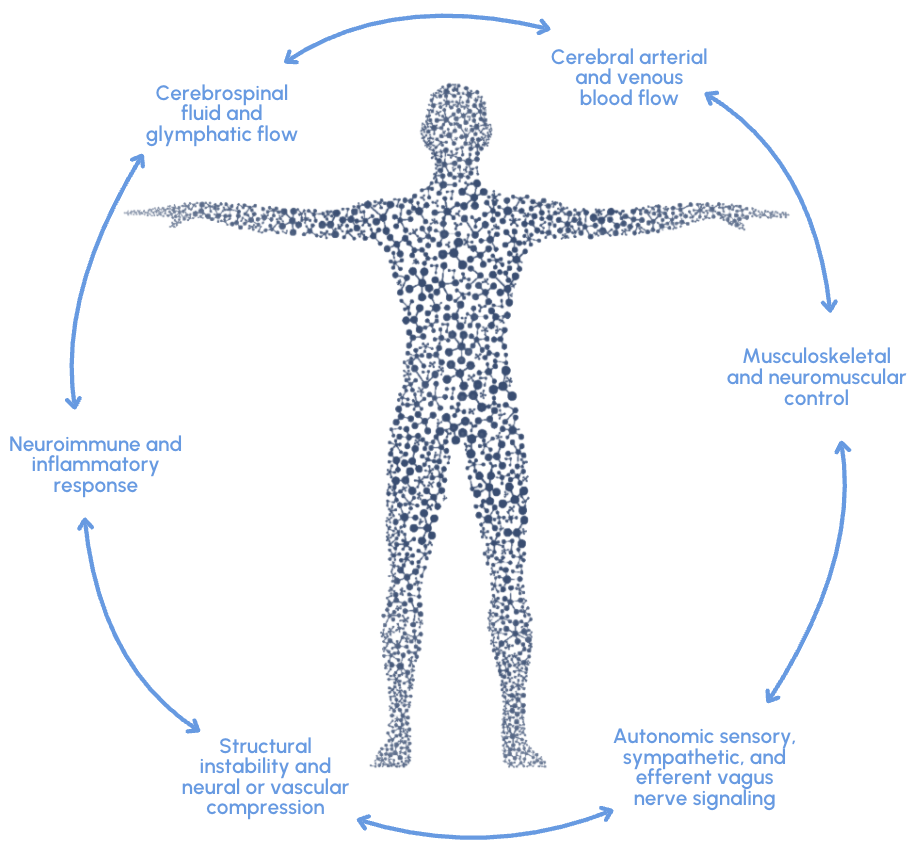
Autonomic nervous system regulation
Neuroimmune signaling
Cerebrospinal fluid and glymphatic circulation
Cerebral arterial and venous blood flow
Sensory and vagal nerve signaling
Musculoskeletal and neuromuscular control of the head and neck
Why is CODA Studying Craniocervical Dysfunction?
-
Many individuals living with complex chronic illnesses experience severe symptoms despite limited findings on conventional diagnostic tests. This disconnect has slowed progress in identifying underlying mechanisms and effective treatments.
Craniocervical dysfunction provides a unique opportunity to study these conditions as a localized structural disruption at a critical neuroregulatory interface.
-
By examining how abnormalities at the craniocervical junction affect biological systems, researchers can explore how disruptions in this region contribute to broader multisystem dysfunction.
Insights from this work may advance understanding of craniocervical dysfunction while revealing mechanisms relevant across multiple complex disorders
-
Rather than positioning it as the sole cause of complex disorders, CODA uses craniocervical dysfunction as a human model to investigate shared disease mechanisms. Anchoring multisystem symptoms to a defined structural issue allows researchers to study how disruptions at this junction influence neuroimmune, autonomic, and cognitive function.