CODA Vascular Initiative

What is the CODA Vascular Initiative?

The CODA Vascular Initiative is an integrated research program investigating venous and microvascular blood flow abnormalities, inflammation, and impaired oxygen delivery across complex chronic disorders.

CODA is supporting the development of this program to generate the scientific evidence needed to advance vascular research toward future therapeutic clinical trials and accelerate treatment advancements for patients.

Program Lead: Professor Resia Pretorius

Professor and Vice Dean: Research and Post Graduate Students

Professor Resia Pretorius is an internationally recognized researcher whose work has helped identify abnormal blood clotting, persistent inflammatory proteins, and microvascular dysfunction as important features of Long COVID and related neuroimmune conditions. Her peer-reviewed research has documented abnormal, clot-resistant “fibrinaloid microclots,” hyperactivated platelets, and endothelial inflammation across these conditions, findings that form the scientific foundation for the CODA Vascular Initiative.

What is Vascular Dysfunction?

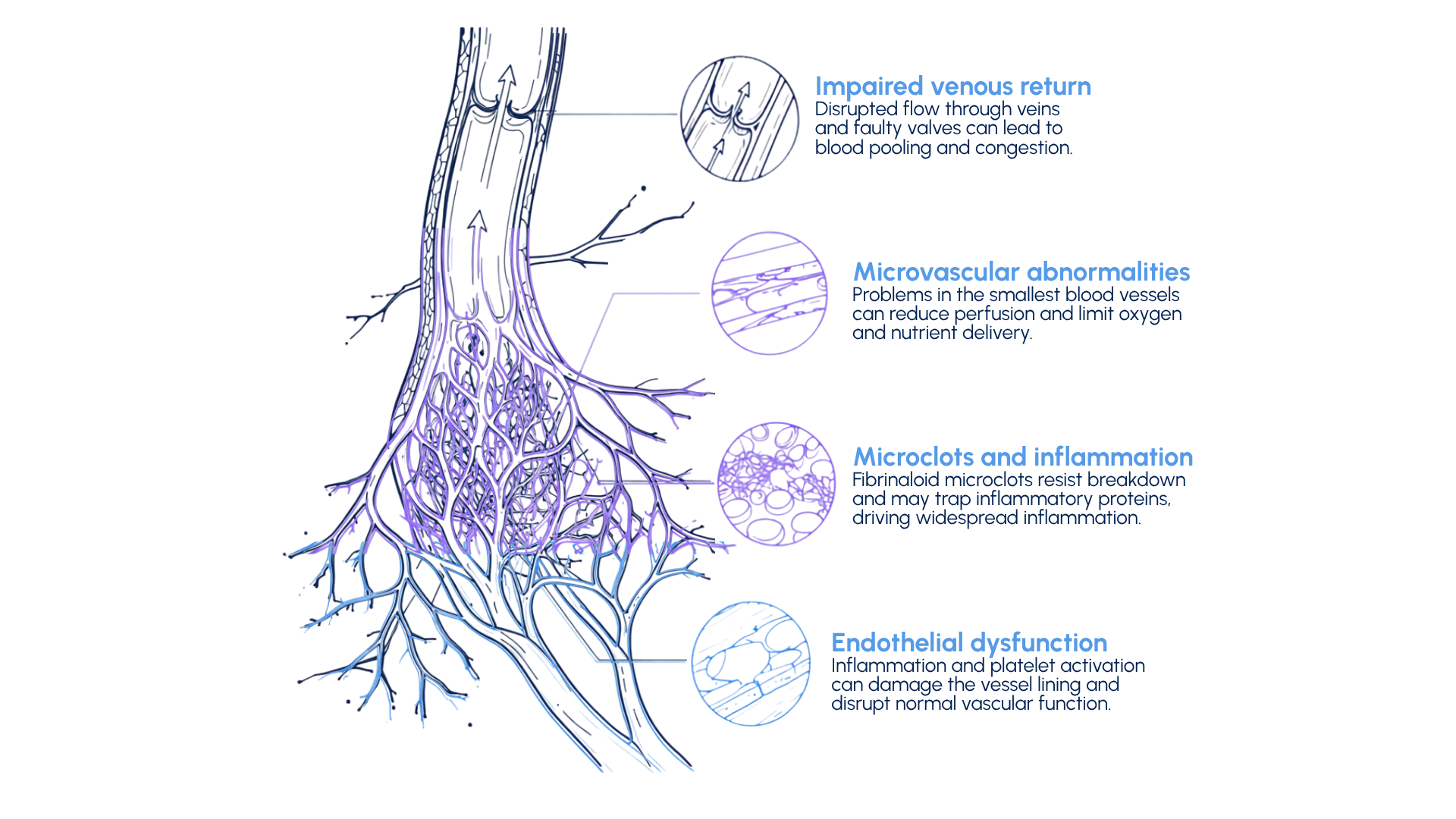
Vascular dysfunction refers to problems in how blood flows through the body's veins and smallest vessels and returns to the heart. These disruptions, centered on venous and microvascular circulation, may impair oxygen and nutrient delivery to tissues and contribute to widespread inflammation

A growing body of peer-reviewed research has identified abnormal, amyloid-like blood clots, called fibrinaloid micro-clots, in the blood of many people with Long COVID, ME/CFS, and other complex chronic disorders. These micro-clots resist normal clot breakdown and can trap inflammatory proteins within their structure. Related research has documented hyper-activated platelets and endothelial inflammation in these conditions, findings that may help explain reduced oxygen delivery, impaired circulation, and the wide-ranging symptoms patients report.

About the CODA Vascular Research Initiative

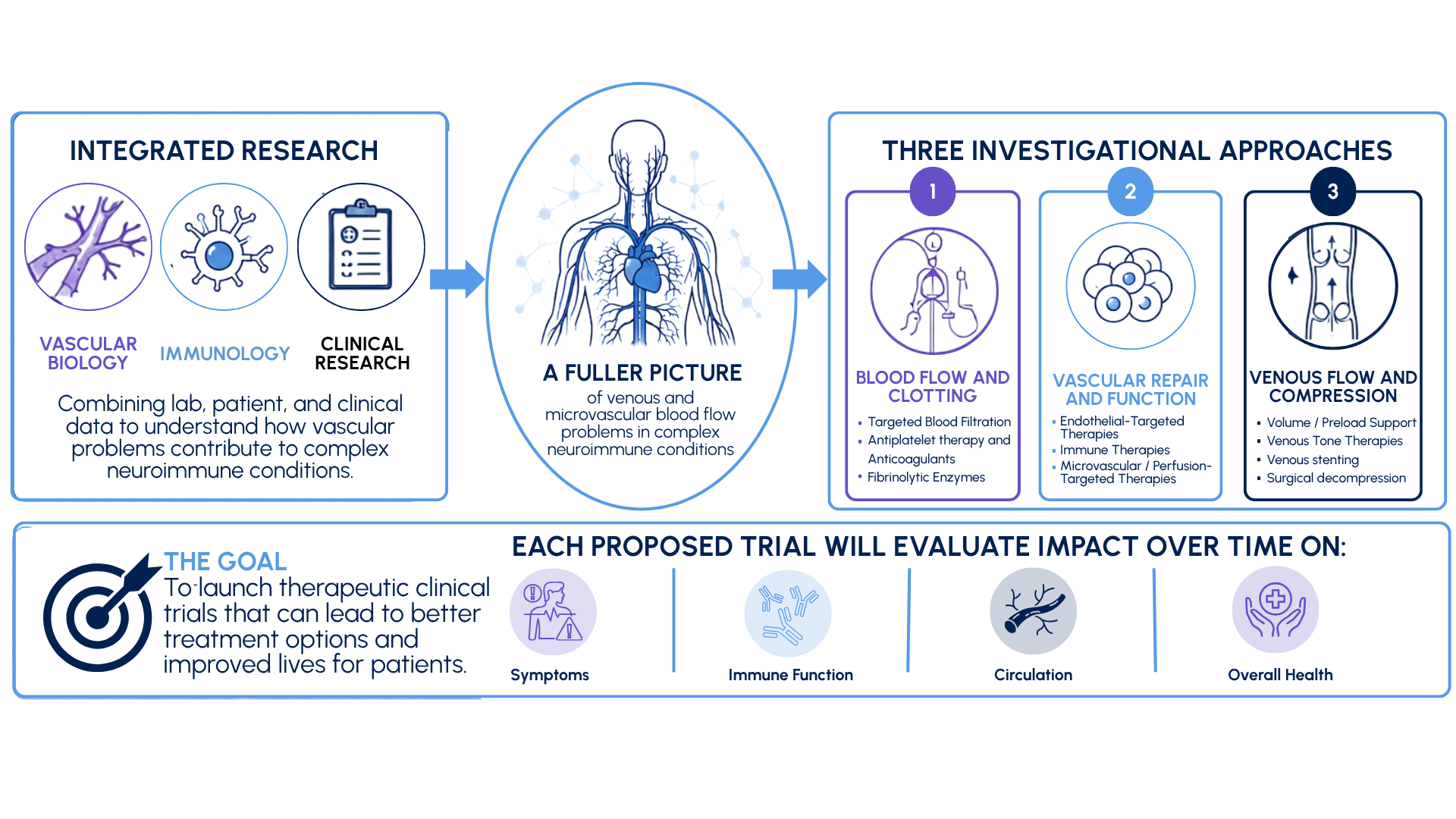
This program will integrate vascular biology, immunology, and clinical research to build a fuller picture of venous and microvascular blood flow problems in Long COVID, ME/CFS, and related neuroimmune conditions. Building on this foundation, the program aims to launch therapeutic clinical trials designed to evaluate three investigational approaches:

  • Targeted blood filtration therapies, designed to reduce circulating inflammatory proteins and abnormal clotting factors

  • Stem cell transplantation, designed to support immune regulation and tissue repair

  • Treatment of venous compression, designed to help restore healthy blood flow and venous return

Each proposed trial arm will evaluate how these interventions may affect symptoms, immune function, circulation, and overall health over time.

How Vascular Dysfunction May Affect the Body

Vascular problems can influence multiple systems and contribute to a wide range of symptoms.

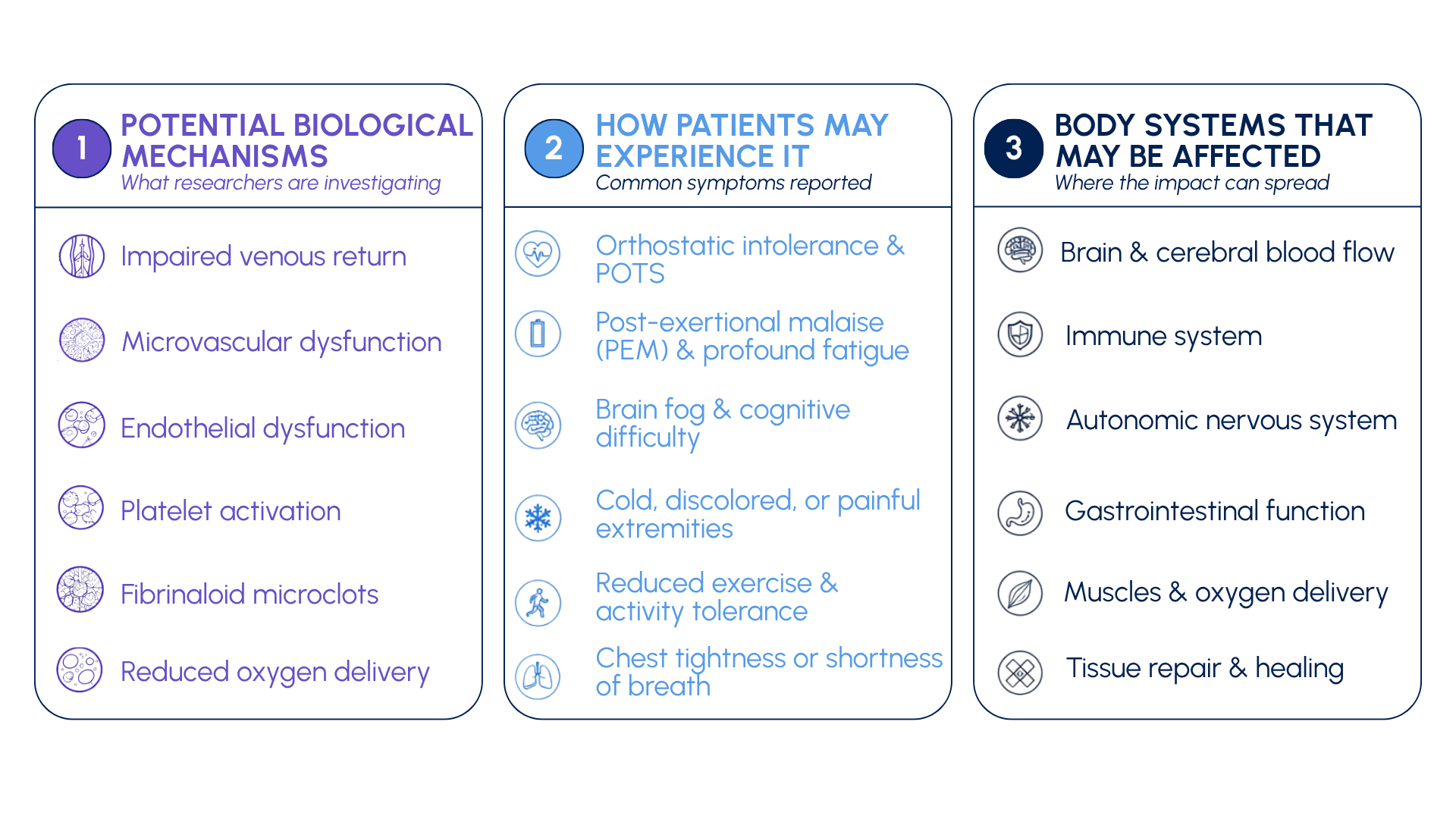
Potential Biological Mechanisms

What Researchers are investigating

  • Impaired Venous Return: Blood has difficulty returning to the heart, leading to pooling and congestion.

  • Microvascular dysfunction: Problems in the smallest blood flow vessel lining impact normal vascular function.

  • Endothelial dysfunction: Inflammation and damage to the vessel lining impair normal vascular function.

  • Platelet activation: Hyper-activated platelets promote abnormal clotting and inflammation.

  • Reduced oxygen delivery: Impaired blood flow and clotting reduce oxygen and nutrient delivery to tissues.

  • Fibrinaloid microclots: Abnormal, amlyoid-like clots resist breakdown and trap inflammatory proteins.

How Patients May Experience It

Common symptoms reported

  • Orthostatic intolerance and Positional Orthostatic Intolerance Syndrome (POTS): Dizziness, rapid heart rate, or lightheadedness when upright, standing, or upon exertion.

  • Post-exertional malaise (PEM) and profound fatigue: Worsened exhaustion after physical or mental exertion.

  • Brain fog and cognitive difficulty: Trouble with memory, focus, and mental clarity, especially when upright.

  • Cold, discolored, or painful extremities: Poor circulation can cause temperature and color changes.

  • Reduced exercise intolerance: Limited ability to sustain activity without worsening symptoms.

  • Chest tightness or shortness of breath: difficulty getting enough air, even with minimal exertion.

Body Systems That May Be Affected

Where the impact can spread

  • Brain and Cerebral Blood Flow: Cognitive function, mood, and neurological health.

  • Immune system: Immune regulation and inflammatory balance.

  • Autonomic nervous system: heart rate, blood pressure, digestions, and temperature regulation.

  • Gastrointestional function: motility, absorption, and gut-brain communication.

  • Muscles and oxygen delivery: Energy production, strength, and recovery.

  • Tissue repair and healing: Celullar repair, regeneration, and wound healing.

Why is CODA Studying Vascular Dysfunction?

  • Symptoms without answers

    Many people living with complex chronic illnesses experience severe circulatory and energy-related symptoms despite normal results on standard vascular testing. This disconnect has slowed progress in identifying underlying mechanisms and effective treatments. Vascular dysfunction offers a biologically grounded framework for understanding these conditions at the level of blood flow, clotting, and oxygen delivery.

  • A mechanism, not just a symptom

    By examining how abnormal clotting, inflammation, and impaired blood flow affect the body's smallest vessels, researchers can explore how these disruptions contribute to fatigue, cognitive difficulty, and multisystem dysfunction. Insights from this work may advance understanding of vascular contributions to disease while informing new therapeutic strategies.

  • From the lab to the clinic

    Rather than treating vascular dysfunction as the sole cause of complex disorders, CODA is investigating it as a measurable, biologically anchored mechanism that may underlie symptoms across multiple conditions. This approach allows researchers to translate laboratory findings directly into clinical trials aimed at improving patient outcomes.

Sign Up to Receive CODA Research News and Updates Right to Your Inbox